

15 May, 2026
Posted by Mega Solution Electrical Engineering Ltd
0 comment
Generator Fault Diagnosis and Repair Guide
Generator Fault Diagnosis and Repair: How to Identify and Fix Every Common Generator Problem for Diesel and Petrol Generators
How to Use This Generator Fault Diagnosis Guide
Generator fault diagnosis is most effective when approached systematically. Random component replacement without diagnosis wastes money, wastes time, and frequently fails to resolve the underlying fault.
This guide is organised around three primary fault presentations that cover every generator failure mode globally. A generator that fails to start. A generator that starts but runs poorly. A generator that shuts down during operation.
Identify your fault presentation first. Then navigate directly to the relevant section. Each section leads with the most common cause of that fault presentation and works through progressively less common causes systematically.
Understanding the Four Fault Categories
Every generator fault originates in one of four systems. Understanding these categories before beginning generator fault diagnosis prevents wasted diagnostic effort.
Mechanical faults affect the engine and its supporting systems. They develop progressively and typically give warning signs before causing complete failure. Common warning signs include unusual noise, excessive vibration, abnormal exhaust smoke colour, and gradual performance deterioration.
Electrical faults affect the alternator, wiring, control circuits, and protective devices. They can develop gradually or occur suddenly without warning. Common warning signs include voltage instability, flickering output, control panel alarms, and intermittent starting problems.
Fuel system faults affect fuel quality, delivery, and injection. They are the most common cause of generator starting failure after battery problems. Common warning signs include difficult starting, black exhaust smoke, power loss under load, and unexpected stalling.
Control system faults affect the digital control module, sensors, governor, and automatic voltage regulator. They frequently present as starting failures, nuisance shutdowns, or incorrect alarm activations that are misdiagnosed as mechanical or electrical problems. Always check the control module fault history before beginning any other generator fault diagnosis procedure.
Diesel Versus Petrol Generator Fault Differences
Diesel and petrol generators share many common fault types but differ significantly in their ignition systems, fuel delivery systems, and cold starting characteristics. Applying the wrong diagnostic procedure for the wrong generator type wastes time and risks damaging components.
Diesel generators use compression ignition. They have no spark plugs and no ignition coil. They use glow plugs for cold starting assistance and fuel injectors for precise fuel delivery. Diesel generator fault diagnosis focuses on compression integrity, injection system condition, and glow plug function.
Petrol generators use spark ignition. They have spark plugs, ignition coils, and either a carburettor or fuel injection system. Petrol generator fault diagnosis focuses on ignition system condition, fuel delivery through the carburettor or injectors, and choke system operation.
Never apply diesel generator diagnostic procedures to a petrol generator or vice versa. The fundamental difference in ignition system design makes cross application of diagnostic procedures both ineffective and potentially damaging.
Reading the Control Module Fault History First
Before performing any physical generator fault diagnosis, read the control module fault history. This single step saves more diagnostic time than any other procedure in this guide.
Modern generator control modules record every alarm, shutdown, and warning event with a timestamp and fault code. A generator that appears to have stalled spontaneously may have shut down on a low oil pressure alarm, a high coolant temperature alarm, or an overspeed alarm. Each of these points to a completely different diagnostic path.
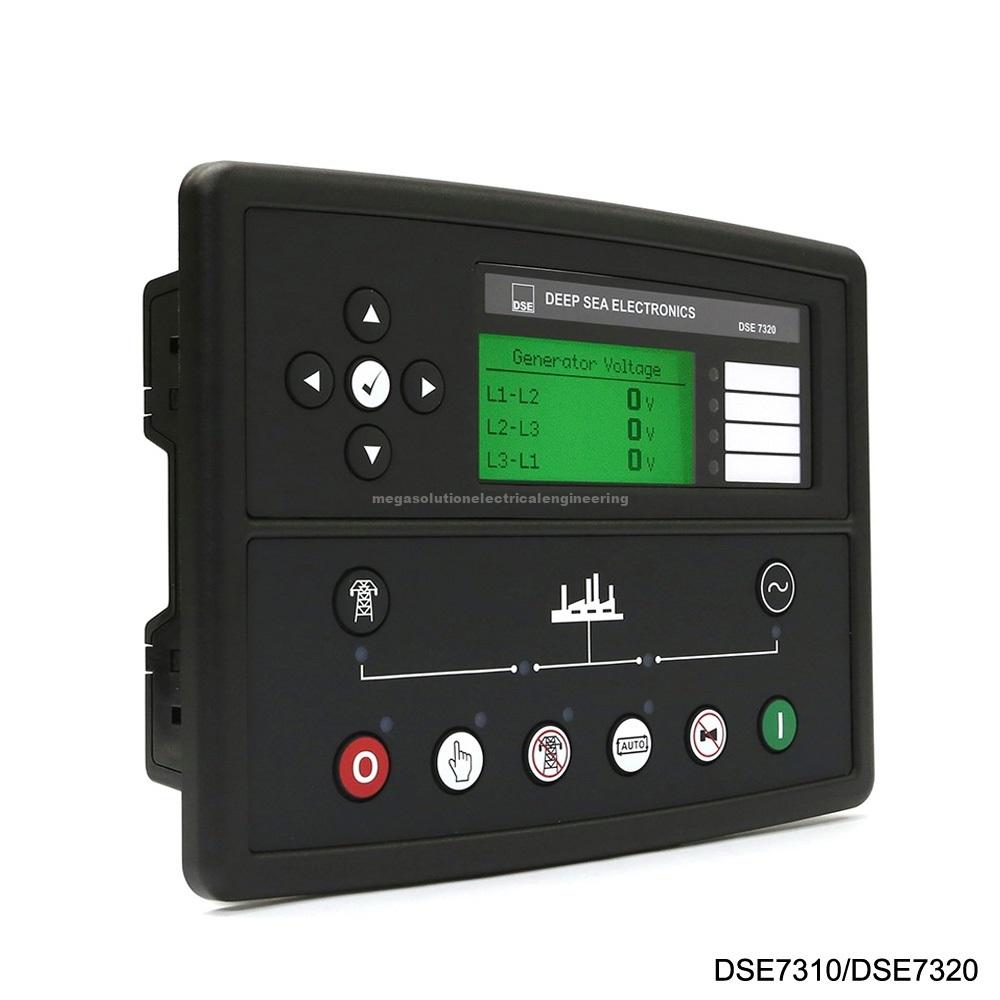
Access the fault history through the control module display panel. Navigate to the alarm history or fault log menu. Record every fault code and its timestamp before clearing any alarms. Fault codes vary between control module manufacturers. Common systems include Deep Sea Electronics modules, ComAp controllers, and Woodward controllers, each with their own fault code libraries documented in their respective technical manuals.
If the control module shows no fault history and the generator fails to start, the fault lies either in the starting circuit before the control module receives a start signal, or in a mechanical condition that prevents the engine from cranking.
Reading the Warning Signs Before Generator Failure Occurs
The most effective generator fault diagnosis happens before the generator fails completely. Recognising developing fault symptoms during operation allows planned repair rather than emergency breakdown response.
Exhaust Smoke Diagnosis
Exhaust smoke colour is the single most powerful non-instrument diagnostic tool available to generator technicians globally. Different smoke colours indicate different fault conditions with high diagnostic specificity.
White smoke on cold startup that clears within two to three minutes of reaching operating temperature is normal. Condensation in the exhaust system burns off during warmup. No action required.
White smoke that persists after the engine reaches operating temperature indicates coolant entering the combustion chamber. The cause is either a failing head gasket or a cracked cylinder head. Both are serious faults requiring immediate shutdown and professional repair. Continuing to operate a generator with persistent white smoke causes rapid and catastrophic engine damage as coolant destroys bearing surfaces and washes lubrication from cylinder walls.
Black smoke
Black smoke indicates a rich fuel mixture. The engine is receiving more fuel than the available air can combust efficiently. Common causes in order of frequency are a severely clogged air filter restricting airflow, faulty or worn injectors delivering an incorrect spray pattern, a turbocharger not providing adequate boost pressure, or the generator being overloaded beyond its rated capacity. Black smoke accompanied by power loss almost always indicates injector or turbocharger problems rather than air filter restriction.
Blue smoke indicates oil burning in the combustion chamber. Common causes include worn piston rings allowing oil past from the crankcase, worn valve stem seals allowing oil past the valve guides, or overfilled engine oil being forced past seals into the intake system. Blue smoke that appears on startup and clears after a few minutes indicates valve stem seal wear. Persistent blue smoke throughout operation at all load levels indicates piston ring wear requiring engine overhaul.
Grey smoke on diesel generators indicates incomplete combustion. Common causes include worn injectors, incorrect injection timing, or early stage wet stacking. Grey smoke accompanied by an oily residue around exhaust joints confirms wet stacking.
Unusual Noise Diagnosis
Abnormal generator noise is an early warning of developing mechanical failure. Identifying noise type and location directs generator fault diagnosis to the correct system immediately.
Knocking from the engine at regular intervals that correspond to engine rotation speed indicates bearing failure or piston slap. Big end bearing failure produces a heavy regular knock that increases with engine load. Piston slap produces a lighter knock that is most pronounced when the engine is cold and reduces as the engine warms up and clearances tighten. Both conditions require immediate shutdown and professional engine assessment.
Squealing from the belt area indicates belt slippage from incorrect tension, a worn belt surface, or a seized accessory bearing. Identify the squealing belt by isolating each belt systematically with the engine running at idle. Address the cause immediately as a slipping belt generates heat that accelerates belt and pulley wear.
Hissing
Hissing from the exhaust system indicates an exhaust leak at a joint, gasket, or crack. An exhaust leak releases hot combustion gases and carbon monoxide at an unintended point. Locate the leak by listening carefully with the engine at idle. Never place hands near a suspected exhaust leak as temperatures exceed 300 degrees Celsius.
Rattling from the engine area that varies with engine speed indicates loose components including heat shields, exhaust clamps, or engine covers. Rattling that is constant regardless of engine speed indicates a loose external component. Identify and secure loose components before they cause secondary damage to adjacent systems.
Grinding from the cooling fan area indicates bearing failure in the water pump, alternator, or idler pulley. The grinding bearing causes progressive misalignment of its driven component, accelerating belt wear and risking sudden catastrophic failure. Identify the failed bearing by removing each belt in sequence with the engine stopped and spinning each component by hand to feel for roughness or play in the bearing.
Vibration Diagnosis
Abnormal generator vibration indicates developing mechanical problems that generator fault diagnosis must identify before they cause failure.
Vibration at the fundamental engine rotation frequency, meaning one vibration cycle per engine revolution, indicates rotor or flywheel imbalance. This type of vibration is felt as a steady rhythmic shake throughout the generator frame.
Vibration at twice the engine rotation frequency indicates misalignment between the engine crankshaft and the generator shaft. Misalignment vibration is typically felt most strongly at the coupling between the engine and generator.
Vibration that increases progressively over several weeks or months indicates deteriorating anti-vibration mounts. As the rubber in the mounts hardens or separates, vibration isolation effectiveness reduces and vibration transmits increasingly to the generator frame, connected pipework, and wiring.
Sudden onset vibration that was not present previously indicates either a mechanical failure such as a broken fan blade or a lost balance weight, or the loosening of a previously secure component. Sudden vibration requires immediate investigation and shutdown if the source cannot be identified quickly.
Instrument and Alarm Reading Interpretation
Control panel instruments and alarm indicators provide continuous real time information about generator health. Understanding what each reading means enables early generator fault diagnosis before symptoms become failures.
Coolant temperature reading at the top of the normal range consistently indicates a developing cooling system problem. Normal operating temperature for most diesel generators is between 82 and 95 degrees Celsius. A reading consistently above 90 degrees without changing ambient conditions warrants cooling system inspection before the next service interval.
Oil pressure reading below the normal range indicates either low oil level, a failing oil pump, a blocked oil filter, or a worn engine with insufficient bearing clearances to maintain pressure. Low oil pressure accompanied by unusual engine noise requires immediate shutdown.
Battery voltage reading below 12.2 volts on a 12 volt system during operation indicates the battery charging circuit is not maintaining adequate charge. The cause is either a failed battery charger, a broken charging alternator belt, or a faulty charging alternator.
Output voltage reading outside the normal range of plus or minus 5% of rated voltage indicates an AVR fault, a governor problem affecting engine speed, or a winding fault in the alternator. Voltage outside this range damages connected equipment and requires immediate investigation.
Output frequency reading outside the normal range of plus or minus 2.5% of rated frequency, which is 50 Hz in Ghana and most of the world or 60 Hz in North America, indicates a governor fault causing incorrect engine speed regulation.
Generator Fails to Start: Mechanical Fault Diagnosis
A generator that fails to start requires systematic diagnosis through a defined sequence of mechanical checks before moving to electrical diagnosis. Follow this sequence in order. Each step eliminates a fault category before moving to the next.
Fuel System Fault Diagnosis
Fuel system faults are the second most common cause of generator starting failure after battery problems. Begin fuel system diagnosis with the simplest checks and progress to more complex diagnosis only when simpler causes are eliminated.
Check the fuel level first. This sounds obvious but fuel depletion is a surprisingly common cause of starting failure globally, particularly on generators with faulty fuel gauges. Never trust the fuel gauge alone. Use a dipstick to manually verify fuel level in the tank.
Inspect fuel quality second. Diesel fuel degrades after approximately six months in storage, forming sediment and microbial growth that blocks fuel filters and damages injectors. Petrol degrades even faster, becoming varnished and sticky within 30 days without fuel stabiliser treatment. Contaminated fuel appears darker than fresh fuel and may have visible particles or a foul smell. If fuel contamination is suspected, drain and flush the entire fuel system before refilling with fresh fuel.
Check fuel filters third. A completely blocked fuel filter prevents fuel reaching the engine entirely. Remove the primary fuel filter and inspect it. A filter that appears dark, wet, or physically distorted requires immediate replacement. Replace both primary and secondary filters simultaneously when contamination is found, as contamination that blocked one filter has typically reached the second.
fuel system
Check for fuel system airlocks fourth. A fuel system airlock prevents fuel flow despite adequate fuel level and clean filters. Airlocks occur after fuel tank depletion, filter replacement without priming, or fuel line disconnection. Bleed the fuel system by locating the bleed screws near the fuel filter or injection pump, loosening them slightly, and pumping the manual priming pump until fuel flows without air bubbles. Tighten each bleed screw when clear fuel appears.
Check the fuel shutoff solenoid fifth. The fuel shutoff solenoid controls fuel delivery to the injection pump. Test the solenoid by applying battery voltage directly to the solenoid terminals while listening for a click indicating mechanical movement. No click with correct voltage applied indicates a seized solenoid mechanism requiring replacement. Correct clicking with correct voltage but no engine start indicates the solenoid is functioning and the fault lies elsewhere.
Check the fuel pump sixth on diesel generators. A failing fuel pump restricts fuel delivery without completely preventing it, causing hard starting or starting followed by immediate stalling. Test fuel pump delivery pressure using a fuel pressure gauge at the injection pump inlet. Compare against the manufacturer’s specified delivery pressure. Low pressure with clean filters indicates a failing fuel pump requiring replacement.
Oil System Fault Diagnosis
Most modern generators include a low oil pressure shutdown switch that prevents the engine from starting when oil pressure is critically low. This protective function is frequently misdiagnosed as an electrical fault.
Check the oil level first using the dipstick. An oil level below the minimum mark triggers the low oil pressure switch and prevents starting. Top up with the correct grade and quantity and attempt to restart.
Check the oil condition second. Oil that appears milky white indicates coolant contamination from a failing head gasket. Oil that appears very thin with a fuel smell indicates fuel dilution from worn injectors or extended cold running. Neither condition allows safe engine operation. Drain and replace contaminated oil before attempting further diagnosis.
Check the low oil pressure switch third. A faulty low oil pressure switch can trigger a no-start condition even with correct oil level and condition. Disconnect the low oil pressure switch and attempt to start the engine. If the engine starts with the switch disconnected the switch is faulty and requires replacement. Important: never run the engine for more than a brief test period with the low oil pressure switch disconnected, as this removes the engine’s protection against genuine low oil pressure conditions.
Air System Fault Diagnosis
Air system restrictions cause hard starting, rich running, black smoke, and eventual stalling. They are most commonly caused by clogged air filters but can also result from collapsed air intake hoses or blocked pre-cleaners.
Inspect the air filter visually. A severely clogged air filter restricts airflow sufficiently to prevent starting in extreme cases, though more commonly it causes hard starting and black smoke. Remove and inspect the filter element. A filter that blocks light completely across its entire surface requires immediate replacement.
Check the air intake hose for collapse or obstruction. A cracked or partially collapsed air intake hose reduces airflow without the filter appearing dirty. Run a hand along the entire air intake path from the filter housing to the engine intake manifold, feeling for restrictions or collapse.
Check the air filter restriction indicator if fitted. A triggered restriction indicator confirms that air filter restriction has reached the maximum allowable level and the filter requires immediate replacement before the engine will perform correctly.
Compression Fault Diagnosis
Low engine compression prevents starting by reducing the pressure and temperature generated during the compression stroke below the level required for fuel ignition. Diesel engines are particularly sensitive to compression loss because they rely entirely on compression heat for ignition rather than an external spark.
Test compression using a compression tester. Remove each glow plug or spark plug and install the compression tester in each cylinder in turn. Crank the engine through at least four compression strokes with the throttle fully open and record the peak pressure in each cylinder.
Acceptable compression pressure for diesel engines is typically between 300 and 500 PSI depending on the engine specification. Values below 250 PSI indicate serious compression loss requiring immediate investigation. For petrol engines acceptable compression is typically between 90 and 120 PSI. Values below 70 PSI indicate serious compression loss.
A variation of more than 10% between cylinders indicates a developing problem in the lower pressure cylinder even if all cylinders are within the acceptable range.
Perform a wet compression test when standard compression testing shows low values. Add a small amount of clean engine oil through the plug hole and retest immediately. If compression increases significantly with oil added the cause is worn piston rings. If compression does not increase with oil added the cause is valve or head gasket failure.
Perform a leak-down test for precise fault location. Introduce compressed air into the cylinder through the plug hole with the piston at top dead centre on the compression stroke. Listen for air escaping from the exhaust indicating exhaust valve failure, from the intake indicating intake valve failure, from the crankcase breather indicating piston ring failure, or from the coolant expansion tank indicating head gasket failure.
Cooling System Fault Diagnosis for Starting Problems
A generator that has overheated and triggered its high temperature shutdown will not restart until it has cooled to a safe temperature. However, simply waiting for the engine to cool and restarting without diagnosing the overheating cause risks immediate recurrence and progressive engine damage.
Follow this six step overheating cause diagnosis sequence before attempting to restart after any overheating shutdown.
Step one: Check coolant level. Low coolant is the most common overheating cause globally. If the coolant level is low, investigate why before refilling. A coolant level that drops without visible external leakage indicates internal leakage through a head gasket or cracked cylinder head.
Step two: Check the thermostat. A stuck closed thermostat prevents coolant circulation to the radiator. Remove and test the thermostat as described in the cooling system maintenance section.
Step three: Check the water pump. A failed water pump impeller causes loss of coolant circulation without external leakage. Check for water pump shaft seal leakage and bearing noise. If the water pump belt is broken the pump has not been circulating coolant regardless of its own condition.
Radiator
Step four: Check the radiator. Blocked radiator fins, a collapsed radiator core, or a faulty radiator cap all reduce cooling efficiency. Inspect the radiator fins for blockage and the cap for correct pressure rating.
Step five: Check the cooling fan. A broken fan belt, seized fan bearing, or broken fan blade reduces airflow through the radiator. Inspect all fan components with the engine stopped.
Step six: Check for internal blockage. Scale deposits from tap water use in the cooling system progressively block coolant passages. A cooling system that overheats despite adequate coolant level and correct component condition may have internal scale blockage requiring chemical descaling treatment.
Perform this post overheating assessment before restarting. Check for coolant in the engine oil. Check for oil in the coolant. These findings indicate head gasket failure requiring professional repair before the engine is restarted.
Generator Fails to Start: Electrical Fault Diagnosis
Electrical faults are the most common cause of generator starting failure globally. Battery problems alone account for the majority of standby generator starting failures. Systematic electrical generator fault diagnosis follows a defined sequence from the battery through the starting circuit to the control system.
Battery and Starting System Fault Diagnosis
Begin every electrical starting failure diagnosis at the battery. A battery fault that is missed at this stage causes all subsequent diagnostic steps to give misleading results.
Measure battery open circuit voltage first. With no load connected and after the battery has rested for at least two hours, a fully charged 12 volt battery reads between 12.6 and 12.8 volts. A reading below 12.2 volts indicates a significantly discharged battery requiring charging before further diagnosis. A reading below 11.8 volts indicates a battery that may have sustained permanent capacity loss from deep discharge.
Charge the battery fully before continuing diagnosis. Attempting to diagnose starting circuit faults with a discharged battery gives misleading results throughout the circuit.
Perform a load voltage test after fully charging the battery. Apply a load equal to half the battery’s cold cranking ampere rating for fifteen seconds while monitoring voltage. A healthy battery maintains above 9.6 volts throughout the test. Voltage that drops below 9.6 volts indicates insufficient battery capacity for reliable starting regardless of the open circuit voltage reading.
Perform a conductance test using a dedicated battery analyser to confirm battery state of health. A battery at 50% state of health shows normal open circuit voltage and may pass a basic load test but fails under the sustained current demand of engine cranking. Conductance testing is the only reliable method for identifying this failure mode without a full cranking current test.
battery terminals
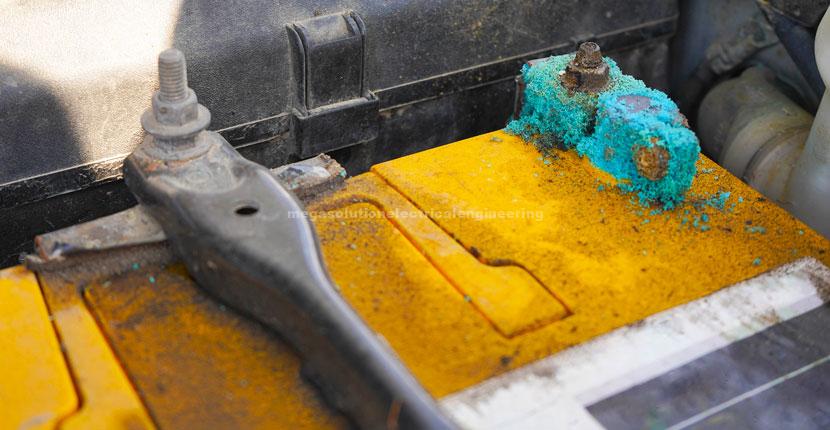
Inspect battery terminals for corrosion. White or blue-green deposits on battery terminals cause high resistance connections that reduce cranking voltage significantly. Clean corroded terminals using a baking soda and water solution, scrub with a wire brush, rinse, dry thoroughly, and apply terminal protector spray. Retest battery voltage after cleaning to confirm the connection is restored.
Inspect battery cables for damage, loose connections, and correct routing. Measure voltage drop across the positive battery cable from the battery terminal to the starter motor terminal during a cranking attempt. Acceptable voltage drop is less than 0.5 volts. Higher voltage drop indicates a high resistance connection in the positive circuit requiring investigation. Repeat the measurement across the earth circuit from the starter motor body to the battery negative terminal. Acceptable voltage drop is less than 0.2 volts.
Starter Motor and Relay Fault Diagnosis
Starter motor faults produce characteristic symptoms that distinguish them from battery faults and control circuit faults.
A single loud click when the start command is given indicates the starter solenoid is energising but the starter motor is not turning. The cause is either a severely discharged battery that cannot maintain solenoid engagement, a faulty starter motor, or a mechanically seized engine. Confirm battery condition first before concluding the starter motor is faulty.
Rapid repeated clicking indicates solenoid chattering from insufficient battery voltage to hold the solenoid engaged. This almost always indicates a discharged or failed battery rather than a starter motor fault. Charge or replace the battery before further diagnosis.
Complete silence when the start command is given indicates no power reaching the starter circuit. Check the start relay, the control module start output, the key switch contacts, and all safety interlocks including the emergency stop, neutral safety switch, and low oil pressure switch.
cranking speed
Slow cranking speed with adequate battery voltage indicates either a high resistance connection in the starting circuit, a mechanically resistant engine, or a weak starter motor with worn brushes or a partially open circuit winding. Measure starter motor current draw using a clamp meter during cranking. Higher than normal current draw with slow cranking indicates mechanical resistance in the engine. Lower than normal current draw with slow cranking indicates a starter motor fault.
Test the starter relay using a multimeter. Measure resistance across the relay coil terminals. A healthy relay coil reads between 50 and 200 ohms depending on the relay specification. An open circuit reading indicates a broken coil requiring relay replacement. Test relay contact operation by applying battery voltage to the coil terminals and measuring continuity across the contact terminals. Contacts that do not close when the coil is energised indicate a faulty relay requiring replacement.
Test the starter solenoid by applying battery voltage directly to the solenoid pull-in winding terminal and confirming the solenoid clicks and the starter motor pinion engages the flywheel ring gear. A solenoid that does not engage when battery voltage is applied correctly requires replacement.
Inspect the flywheel ring gear through the starter motor aperture using a flashlight. Worn or broken ring gear teeth cause the starter motor to spin without engaging or to engage with a grinding noise. Ring gear damage requires flywheel removal and ring gear replacement, which is a professional repair procedure.
Ignition System Fault Diagnosis
Ignition system generator fault diagnosis differs fundamentally between diesel and petrol generators.
For diesel generators the ignition equivalent is the glow plug system. Glow plugs heat the combustion chamber to assist cold starting. A diesel generator that cranks normally but fails to start in cold conditions, or produces excessive white smoke during extended cranking before starting, likely has glow plug system faults.
Test each glow plug for continuity using a multimeter set to resistance. A healthy glow plug reads between 0.5 and 2 ohms depending on its specification. An open circuit reading indicates a failed glow plug element requiring replacement. A zero ohm reading indicates a short circuit within the glow plug requiring replacement.
Test the glow plug relay or timer using a circuit tester. Confirm the relay energises the glow plugs for the correct pre-heating period when the ignition is switched on. A relay that fails to energise or energises for too short a period prevents adequate pre-heating, causing hard starting particularly in cold conditions.
For petrol generators test spark plug condition by removing each plug and inspecting the electrode and insulator condition. Read the plug condition as a diagnostic indicator. A normal plug shows a light tan or grey deposit. A black sooty plug indicates rich running from air restriction or carburettor problems. A black oily plug indicates oil burning from ring or valve seal wear. A white blistered plug indicates overheating from lean running or incorrect heat range. A melted electrode indicates pre-ignition requiring immediate investigation of ignition timing and fuel quality.
spark plug gap
Test spark plug gap using a feeler gauge. Incorrect gap causes weak or intermittent spark. Adjust to the manufacturer’s specified gap, typically between 0.6 and 1.0 millimetres depending on the engine.
Test the ignition coil primary winding resistance using a multimeter. Typical primary resistance is between 0.4 and 2 ohms. Secondary winding resistance measured between the primary terminal and high tension output is typically between 6,000 and 15,000 ohms. Values significantly outside these ranges indicate a faulty coil requiring replacement.
Control System Fault Diagnosis
Control system faults are the most frequently misdiagnosed category in generator fault diagnosis globally. A fault that appears mechanical or electrical is often a control system issue that is faster and cheaper to resolve than the misdiagnosed alternative.
Read the control module fault history before any other diagnostic step as established in the introduction to this guide.
Check all safety interlock inputs to the control module. A control module that receives a starting command but does not engage the starter motor is typically responding to an active safety interlock. Common interlocks that prevent starting include the emergency stop circuit, the low oil pressure switch, the high coolant temperature switch, the neutral safety switch on generators with automatic transfer switches, and the remote start enable input on remotely monitored installations.
Test each safety interlock input systematically. With the control module in manual start mode, check each interlock input voltage or continuity at the control module terminals. An input that shows an active fault condition when the physical sensor condition does not warrant it indicates either a faulty sensor or a wiring fault between the sensor and the control module.
governor system
Inspect the governor system. A governor that is not receiving a run signal from the control module, or a governor actuator that is mechanically stuck, prevents fuel delivery despite correct electrical signals throughout the rest of the starting circuit.
Check the automatic voltage regulator for diesel generators with electronic AVRs. An AVR fault can prevent the generator from building voltage after starting, causing the control module to interpret the generator as having failed to start and initiating a shutdown.
Perform a control module reset following the manufacturer’s procedure as a last resort before replacing the module. Document all fault codes and current settings before performing the reset as this procedure clears all stored data. If the generator starts correctly after a reset, the fault was a software or configuration issue rather than a hardware failure.
Generator Starts but Runs Poorly
A generator that starts but exhibits performance problems during operation requires a different diagnostic approach from a starting failure. The generator has demonstrated it can start, which confirms that the battery, starting circuit, fuel delivery, and basic compression are adequate. The fault lies in systems that affect sustained operation rather than initial starting..
Generator Stalling During Operation
Generator stalling during operation is one of the most diagnostically challenging fault presentations because the fault is not present when the generator is stopped and cannot always be reproduced during diagnosis.
The first diagnostic question is whether the stall is spontaneous or load related. This distinction directs the entire subsequent diagnosis.
A spontaneous stall occurs without any change in load or operating conditions. The generator simply stops during normal operation. Spontaneous stalling causes include fuel delivery restriction that is sufficient for light load operation but insufficient for sustained running, governor hunting that eventually causes the engine to lose speed control and stall, control module faults that trigger spurious shutdown commands, and safety interlock activations from developing fault conditions.
A load related stall occurs when load is connected or when load increases. The generator starts and runs at no load but stalls immediately when load is applied or when load increases beyond a certain level. Load related stalling causes include overloading beyond the generator’s rated capacity, a failing injection pump that cannot increase fuel delivery under load, a partially blocked fuel filter that restricts flow when demand increases, a failing alternator that draws excessive mechanical load, and incorrect governor settings that prevent adequate speed recovery when load is applied.
Governor Hunting Diagnosis and Repair
Governor hunting is a condition where engine speed oscillates continuously rather than stabilising at the set point. It appears as a rhythmic rise and fall in engine noise and a corresponding fluctuation in generator output frequency visible on the control panel frequency meter.
Governor hunting causes include incorrect governor gain settings on electronic governors, a worn or sticky mechanical governor mechanism, a faulty governor actuator motor or solenoid, and air in the fuel system causing intermittent fuel delivery.
Diagnose governor hunting by monitoring output frequency during operation. A frequency that oscillates by more than 1 Hz continuously indicates governor hunting rather than normal load response variation.
Adjust electronic governor gain settings following the manufacturer’s procedure. Reducing gain reduces hunting but also reduces load response speed. The correct setting provides stable frequency without hunting while maintaining adequate response to load changes.
Inspect mechanical governor components for wear and sticking. A governor that hunts only when cold but stabilises at operating temperature indicates a sticky governor mechanism that frees up as oil viscosity reduces with temperature. Clean and lubricate the governor mechanism following the manufacturer’s procedure.
Generator Overheating During Operation
A generator that overheats and triggers its high temperature shutdown during operation requires diagnosis of the overheating cause before being restarted. Follow the six step overheating cause diagnosis sequence detailed in the cooling system fault diagnosis section.
Additionally, consider operating conditions as a contributing factor. A generator running in an inadequately ventilated enclosure overheats regardless of cooling system condition. Ensure adequate airflow around the generator with a minimum clearance of 1 metre on all sides and confirm that hot exhaust air from the radiator is not recirculating back through the intake.
A generator that overheats only at high load indicates either that the generator is operating at or above its rated capacity, or that the cooling system is operating at the limit of its capacity and any reduction in efficiency from a partially blocked radiator or low coolant level tips it into overheating. Reduce load to within the rated capacity and inspect the cooling system for any efficiency reducing conditions..
Generator Output Voltage Problems
Output voltage problems affect all connected equipment and require prompt diagnosis and repair.
High output voltage above 110% of rated voltage indicates AVR malfunction causing excessive field excitation, or a faulty voltage sensing circuit providing incorrect feedback to the AVR.
Low output voltage below 90% of rated voltage indicates AVR malfunction causing insufficient field excitation, a winding fault in the alternator reducing output capacity, or the generator being overloaded beyond its rated capacity causing voltage to collapse under load.
Fluctuating output voltage that varies continuously indicates AVR instability from incorrect stability settings, a loose connection in the AVR sensing circuit causing intermittent feedback, or a developing alternator winding fault.
Test AVR operation by measuring output voltage while varying load. A correctly functioning AVR maintains output voltage within plus or minus 2.5% of rated voltage across the full load range from no load to full load. Voltage that varies more than this indicates AVR adjustment or replacement is required.
Test alternator insulation resistance using a megohmmeter. Apply 500 volts DC between the alternator windings and earth. A healthy alternator reads above 1 megohm. Values below 1 megohm indicate insulation degradation requiring professional assessment and repair.
Generator Output Frequency Problems
Output frequency problems indicate governor system faults causing incorrect engine speed regulation.
High frequency above 52.5 Hz on a 50 Hz system indicates the governor is allowing engine speed to run above the set point. Common causes include incorrect governor speed setting, a stuck open governor actuator, or a failed governor speed sensor.
Low frequency below 47.5 Hz on a 50 Hz system indicates the governor is allowing engine speed to fall below the set point. Common causes include governor gain set too low, a fuel delivery restriction limiting maximum engine power, or the generator being overloaded beyond its capacity to maintain rated speed.
Hunting frequency that oscillates continuously indicates governor instability as described in the governor hunting section. Adjust governor stability settings following the manufacturer’s procedure.
Generator Mechanical Repair Procedures
The following repair procedures address every major mechanical fault identified during generator fault diagnosis. Each procedure follows the diagnostic findings from the fault diagnosis sections above.
Battery Replacement and Testing Procedure
Replace the generator starting battery when conductance testing confirms state of health below 60% of original capacity, when load voltage testing shows voltage dropping below 9.6 volts, or when the battery is more than four years old regardless of apparent condition.
Select a replacement battery that matches or exceeds the original specification for cold cranking amperes, reserve capacity, and physical dimensions. Never fit a battery with lower cold cranking ampere rating than the original specification as this reduces starting reliability in adverse conditions.
Disconnect the negative terminal first, then the positive terminal. This sequence prevents accidental short circuits against the generator frame during disconnection. Install the new battery with positive terminal first, then negative terminal. Apply terminal protector spray to both terminals after connection.
Test the new battery before returning the generator to service. Confirm open circuit voltage reads between 12.6 and 12.8 volts. Confirm the float charger output is within the correct range for the new battery type. AGM batteries require a lower float charge voltage than flooded batteries, typically 13.5 to 13.8 volts versus 13.8 to 14.1 volts for flooded batteries.
Fuel System Repair Procedures
Fuel filter replacement is the most frequently required fuel system repair. Replace both primary and secondary fuel filters simultaneously. Prime the fuel system after filter replacement to prevent airlocks. Use the manual priming pump to fill the new filters with fuel before attempting to start. Failure to prime after filter replacement causes extended cranking that stresses the starter motor and battery.
Fuel injector cleaning is required when injector deposits cause poor spray pattern, excessive black smoke, or fuel consumption increase without load change. Use a specialist fuel injector cleaning service rather than attempting in-generator cleaning with fuel additives, which are inadequate for heavily contaminated injectors. Confirm injector spray pattern and opening pressure after cleaning using a fuel injector test bench.
Fuel injector replacement is required when cleaning does not restore correct spray pattern or when injector leakage is confirmed. Use only manufacturer specified replacement injectors. Incorrect injector specification causes combustion problems that generate fault codes and damage engine components.
Fuel pump replacement is required when delivery pressure testing confirms pressure below the manufacturer’s specification. Replace the fuel pump with a manufacturer specified unit. An incorrect fuel pump may deliver adequate pressure at low speed but fail to maintain pressure at full load, causing load related stalling.
Oil System Repair Procedures
Oil leak repair addresses the most common oil system fault. Identify the leak source precisely before attempting repair. Common leak locations include the rocker cover gasket, the sump drain plug and washer, the oil filter housing seal, the crankshaft front and rear oil seals, and the oil cooler connections on engines fitted with oil cooling systems.
Replace gaskets and seals with manufacturer specified parts. Generic gaskets may not match the correct material specification for the operating temperature and oil type used. Apply gasket sealant only where specified by the manufacturer. Incorrect sealant application causes leaks by preventing correct gasket seating.
Tighten drain plugs and oil filter housings to the manufacturer’s specified torque. Overtightening damages threads and deforms sealing surfaces. Undertightening allows leakage. Use a calibrated torque wrench for all threaded connections in the oil system.
Cooling System Repair Procedures
Coolant leak repair requires precise leak location before component replacement. Pressure test the cooling system using a cooling system pressure tester to identify leaks that are not visible during a static inspection. Connect the tester to the expansion tank filler neck and pressurise to the radiator cap rating, typically 0.9 to 1.1 bar. Leaks that are too small to detect under normal operating pressure become visible at test pressure.
Hose replacement is required when hoses show cracking, swelling, softness, or coolant leakage at the hose connections. Replace hoses in pairs where possible. A hose adjacent to one that has failed is typically of the same age and condition and will fail shortly afterwards. Use manufacturer specified replacement hoses. Generic hoses may not match the correct temperature rating or diameter for the application.
Radiator repair or replacement is required when pressure testing reveals internal leakage or when external inspection confirms physical damage or severe corrosion. Minor external leaks from the radiator core can be temporarily addressed with radiator stop leak compounds, but permanent repair requires specialist radiator repair or replacement.
Water pump replacement procedure requires draining the cooling system completely before pump removal. Replace the water pump impeller seal and bearing as a complete assembly rather than attempting component level repair. Fit a new thermostat simultaneously with water pump replacement as the thermostat is accessible during this procedure and is inexpensive insurance against a second cooling system failure shortly after the water pump repair.
Compression Repair Procedures
Piston ring replacement is required when wet compression testing confirms ring wear as the cause of compression loss. This is a major engine overhaul procedure requiring complete engine disassembly, cylinder bore measurement, and assessment of cylinder wall condition before ring selection. Cylinders that show wear beyond the manufacturer’s service limit require re-boring and honing to restore the correct bore diameter and surface finish before new rings are fitted. This procedure requires professional workshop facilities and is beyond the scope of field repair.
Valve repair is required when leak-down testing confirms valve leakage as the cause of compression loss. Minor valve leakage from carbon deposits on the valve seat can sometimes be resolved by valve grinding, which resurfaces the valve face and seat to restore a gas tight seal. Severe valve damage including bent valves, cracked valve faces, or deeply pitted seats requires valve replacement and seat reconditioning. Both procedures require cylinder head removal and specialist workshop equipment.
Head gasket replacement is required when wet compression testing or leak-down testing confirms head gasket failure, or when coolant contamination of engine oil confirms internal coolant leakage. Head gasket replacement requires cylinder head removal, thorough cleaning of both head and block mating surfaces, checking head flatness using a precision straight edge, and fitting a new gasket with all bolts tightened to the manufacturer’s specified torque in the correct sequence. Head gasket failure on a modern diesel engine is a significant repair that requires professional expertise to perform correctly.
Exhaust System Repair Procedures
Exhaust leak repair requires locating the leak precisely with the engine running. Listen and feel carefully for exhaust gas escaping from joints, cracks, and gasket faces. Mark the leak location with chalk before shutting down the engine as some leaks are difficult to relocate on a cold system.
Exhaust manifold gasket replacement requires removing the exhaust manifold from the cylinder head. Clean both mating surfaces thoroughly before fitting the new gasket. Tighten manifold bolts to the manufacturer’s specified torque in the correct sequence, working from the centre outward. Retighten manifold bolts after the first heat cycle as thermal expansion and contraction beds in the new gasket.
Exhaust pipe and muffler replacement requires matching the replacement components to the correct diameter, material specification, and configuration for the generator model. Undersized exhaust piping increases back pressure and reduces engine performance. Always measure exhaust back pressure after any exhaust system modification or replacement to confirm it is within the manufacturer’s specified limit.
Belt and Pulley Repair Procedures
Belt replacement procedure requires releasing belt tension before removal. On spring loaded tensioner systems, use the correct tool to rotate the tensioner against its spring and hold it while the belt is removed and refitted. On manually adjusted systems, loosen the adjuster bolt before attempting belt removal.
Fit the new belt over all pulleys before tensioning. Ensure the belt is correctly seated in all pulley grooves before applying tension. A belt that is incorrectly seated in a pulley groove will throw off immediately when the engine starts, potentially causing secondary damage.
Adjust belt tension to the manufacturer’s specified value using a belt tension gauge. Check pulley alignment before fitting any new belt. Fitting a new belt to misaligned pulleys causes immediate accelerated wear and premature failure.
Pulley replacement requires removing the old pulley using the correct pulley puller tool for the pulley type. Never use a hammer to remove or install pulleys as this damages shaft bearings. Install the new pulley to the manufacturer’s specified depth and secure with the correct fastener torque.
Generator Electrical Repair Procedures
Electrical repair procedures carry arc flash and electric shock hazards. Always isolate the generator completely from all power sources before performing any electrical repair. Confirm isolation using a calibrated voltage tester at the repair location before beginning work. Never assume a circuit is isolated without testing.
Electrical Connection Repair Procedures
Clean corroded terminals using a wire brush and contact cleaner before assessing whether repair or replacement is required. A terminal that remains pitted, cracked, or physically damaged after cleaning requires replacement. Crimped terminals must be replaced using the correct crimping tool and die for the terminal size. An incorrectly crimped terminal has higher resistance than a correctly crimped one regardless of its appearance.
Replace frayed or damaged wiring with wire of the correct conductor cross section for the circuit current rating. Undersized wire causes voltage drop and heat generation that degrades insulation and eventually causes failure. Use heat shrink tubing with adhesive lining rather than electrical tape for permanent repairs. Heat shrink provides superior moisture protection and mechanical strength compared to tape.
Test all repaired connections using a multimeter in voltage drop mode with current flowing. Measure voltage drop across each repaired connection. Acceptable voltage drop is less than 0.1 volts per connection. Higher voltage drop indicates a high resistance connection requiring further cleaning or replacement.
Fuse and Relay Replacement Procedures
Always identify and resolve the cause of a blown fuse before installing a replacement. A fuse that blows immediately on replacement indicates a fault in the protected circuit requiring investigation before further fuse replacement. Never install a fuse with a higher current rating than the original specification. This removes overcurrent protection from the circuit and risks fire from overloaded wiring.
Test relays using a multimeter before replacement. Measure coil resistance and confirm contact operation as described in the starter relay testing section. Replace relays with identical specification units. A relay with incorrect contact rating may appear to function correctly at light loads but fail under full current.
Test RCD operation monthly by pressing the test button on the RCD body. An RCD that does not trip when its test button is pressed has failed and requires immediate replacement. A non-functioning RCD provides no protection against earth fault currents or electric shock.
Starter Motor Repair and Replacement
Starter motor brush replacement is the most common starter motor repair globally. Access the brush assembly by removing the starter motor end cover. Measure brush length against the manufacturer’s minimum wear specification. Brushes worn below the minimum specification require replacement as a set. Clean the commutator surface with fine sandpaper after brush replacement to restore the correct contact surface.
Starter motor replacement is required when brush replacement does not restore correct starting performance, when armature testing confirms an open or short circuit winding, or when physical damage to the motor housing or drive mechanism is confirmed. Replace the starter motor with a manufacturer specified unit. An incorrect starter motor may not provide adequate cranking torque for the engine compression ratio and displacement.
Alternator and AVR Repair Procedures
AVR adjustment is required when output voltage is consistently high or low but stable. Access the AVR voltage adjustment potentiometer and adjust in small increments while monitoring output voltage with a calibrated voltmeter. Allow the voltage to stabilise for thirty seconds after each adjustment before making further changes. Confirm output voltage is within plus or minus 2.5% of rated voltage at no load and at full load after adjustment.
AVR replacement is required when voltage testing confirms AVR malfunction that adjustment cannot resolve, or when physical inspection reveals burnt components or damaged circuits. Replace the AVR with the correct specification unit for the alternator model. An incorrect AVR specification causes voltage instability or alternator damage.
Alternator winding repair requires specialist rewinding facilities and is not a field repair procedure. When insulation resistance testing confirms winding insulation failure, the alternator requires removal and professional rewinding or replacement. Contact Mega Solution Electrical Engineering Ltd for alternator assessment and repair services across Ghana.
Generator Control System Repair Procedures
Control system repair requires careful documentation of all settings before any component replacement or reset procedure. Modern digital control modules store extensive configuration data that is lost during replacement or factory reset.
Control Module Diagnosis and Rese
Document all current settings and fault codes before attempting any control module repair procedure. Photograph the control module display showing all configured parameters. Record every fault code from the alarm history with its timestamp.
Perform a control module reset following the manufacturer’s specific procedure for the installed module. Deep Sea Electronics, ComAp, and Woodward controllers each have different reset procedures documented in their respective technical manuals. A reset resolves software faults and configuration errors that cause starting failures and nuisance alarms without requiring hardware replacement.
Restore all documented settings after reset. Verify correct operation of all protective functions after settings restoration by simulating fault conditions where possible. Confirm the low oil pressure shutdown, high coolant temperature shutdown, and overspeed shutdown all operate at the correct setpoints.
Control module replacement is required when reset does not resolve the fault, when physical damage including burnt circuits or component damage is confirmed, or when the module fails to communicate with diagnostic equipment. Replace with an identical module or a confirmed compatible replacement. Programme the replacement module with all settings from the documented configuration before returning the generator to service.
Sensor Testing and Replacement
Test resistive sensors including oil pressure sensors and coolant temperature sensors by disconnecting them from the wiring harness and measuring their resistance at known temperatures or pressures using a reference instrument. Compare measured resistance against the manufacturer’s resistance versus temperature or pressure characteristic curve. A sensor that deviates significantly from the specified characteristic requires replacement.
Test magnetic pickup speed sensors by measuring the AC voltage generated as the flywheel gear teeth pass the sensor tip during cranking. A healthy sensor generates a signal typically between 1 and 10 volts AC depending on sensor specification and engine speed. No signal during cranking indicates either incorrect air gap between the sensor tip and gear teeth, damaged gear teeth, or sensor winding failure.
Adjust magnetic pickup air gap after replacement. The correct air gap is typically between 0.5 and 1.5 millimetres depending on the sensor specification. Too large an air gap reduces signal amplitude below the control module’s minimum detection threshold. Too small an air gap risks sensor contact with the rotating gear teeth.
Replace faulty sensors with manufacturer specified units and recalibrate the control module after replacement where the module specification requires calibration.
Governor and AVR Adjustment
Governor speed adjustment is required when output frequency is consistently high or low but stable. Access the governor speed adjustment on the electronic governor module and adjust in small increments while monitoring output frequency with a calibrated frequency meter. The target is rated frequency plus or minus 0.5% at no load, with the governor maintaining frequency within plus or minus 2.5% from no load to full load.
Governor stability adjustment is required when governor hunting is confirmed. Reduce the gain setting on the electronic governor module in small increments until hunting stops while maintaining adequate load response. A governor that is too stable, meaning gain set too low, responds slowly to load changes causing frequency dips when load is applied.
AVR stability adjustment is required when output voltage hunts continuously. Access the AVR stability potentiometer and adjust following the manufacturer’s procedure. Correct stability setting provides stable voltage without hunting while maintaining adequate response to load changes.
Automatic Mains Failure System Testing
Test the complete automatic mains failure system monthly as part of the generator maintenance schedule. Simulate a mains failure by opening the mains incomer circuit breaker. The transfer switch should open the mains contactor and close the generator contactor within the programmed transfer time delay, typically between 5 and 30 seconds after generator start.
Confirm correct voltage and frequency at the load before the transfer switch operates. The transfer switch must not connect load to the generator until output parameters are within the correct range.
Simulate mains restoration by closing the mains incomer circuit breaker. The control system should run the generator in parallel with mains for the programmed retransfer delay, typically between 1 and 5 minutes, before transferring load back to mains and initiating the generator cooldown and shutdown sequence.
Test the transfer switch contact condition annually. Contact resistance across the closed transfer switch contacts must be below 0.001 ohms. Higher contact resistance causes voltage drop and heating at the transfer switch contacts during load transfer.
Grounding and Circuit Breaker Fault Diagnosis and Repair
Grounding System Diagnosis
A generator with inadequate grounding presents a serious electric shock hazard to operators and maintenance personnel. Test grounding system integrity using a dedicated earth resistance tester. A standard multimeter cannot accurately measure earth resistance and must not be used for this purpose.
The earth resistance tester uses a three point measurement technique. Drive two test stakes into the ground at specified distances from the grounding rod and measure the resistance of the earth path between them. Acceptable earth resistance is below 25 ohms as specified in IEC 60364 and the National Electrical Code. Values above 25 ohms indicate inadequate grounding requiring remediation.
Improve inadequate grounding by driving the grounding rod deeper into the ground. The minimum grounding rod depth is 8 feet or 2.4 metres. In areas with dry or rocky soil where achieving adequate depth is difficult, install additional grounding rods connected in parallel. Each additional rod reduces the total earth resistance in proportion to the number of rods installed.
Clean corroded grounding connections using sandpaper or a wire brush to expose clean metal at all contact surfaces. Tighten all grounding connections to the manufacturer’s specified torque. Apply anti-corrosion compound to all cleaned grounding connections to prevent rapid recurrence of corrosion.
Circuit Breaker Diagnosis and Repair
A tripped circuit breaker indicates that a fault condition caused current to exceed the breaker’s rated trip current. Before resetting a tripped breaker, identify and resolve the fault condition that caused the trip. A breaker that trips again immediately after reset indicates a persistent fault requiring investigation before further reset attempts.
Test thermal magnetic circuit breaker operation using a circuit breaker test set that injects a controlled overcurrent through the breaker and measures the trip time. Compare the measured trip time against the breaker’s time-current characteristic curve. A breaker that trips too quickly or too slowly requires replacement.
Test RCD operation monthly using the test button. An RCD that fails to trip when its test button is pressed requires immediate replacement. Test RCD trip time annually using a dedicated RCD tester that measures the time from fault current application to trip. Acceptable trip time is less than 300 milliseconds for a standard RCD and less than 40 milliseconds for a high speed RCD.
Replace damaged or seized circuit breakers with identical specification units. Never replace a breaker with one of higher current rating than the original specification. This removes overcurrent protection from the wiring downstream of the breaker.
When Generator Fault Diagnosis Requires Professional Help
Faults Beyond DIY Repair
Effective generator fault diagnosis identifies the boundary between faults that owners and operators can safely repair and faults that require professional expertise and specialist equipment.
The following faults require professional generator repair and maintenance services regardless of the owner’s technical capability.
Engine mechanical overhaul including piston ring replacement, cylinder reboring, valve reconditioning, and head gasket replacement on modern diesel engines. These procedures require precision measurement equipment, specialist tools, and detailed knowledge of the specific engine design.
Alternator winding repair and rewinding requires specialist rewinding facilities and winding specification data that is not available to non-specialist workshops.
Fuel injection system repair including injection pump calibration and injector reconditioning requires specialist test equipment including fuel injection test benches that are not practical for field use.
Shaft alignment measurement and correction using laser alignment equipment requires specialist tools and training to perform correctly. Incorrect alignment causes rapid bearing failure and coupling damage that creates more expense than the alignment procedure would have cost.
Control module programming and configuration on complex industrial installations requires specialist knowledge of the specific control system and access to manufacturer programming tools.
Automatic mains failure system commissioning and testing on new installations requires specialist knowledge of transfer switch operation, load sequencing, and parallel operation to ensure correct and safe system operation.
Any repair involving high voltage connections on the generator output terminals or distribution system requires qualified electrical engineer expertise and compliance with local electrical safety regulations.
Professional Generator Fault Diagnosis and Repair Services From Mega Solution
Mega Solution Electrical Engineering Ltd provides comprehensive generator fault diagnosis and repair services for residential, commercial, and industrial clients across Ghana.
Our fault diagnosis services use calibrated diagnostic equipment including compression testers, fuel pressure gauges, insulation resistance testers, earth resistance testers, vibration analysers, and thermal imaging cameras to identify generator faults quickly and accurately. We diagnose faults that basic visual and multimeter testing cannot identify, saving clients the cost of incorrect component replacement based on incomplete diagnosis.
Our repair services cover the complete range of generator mechanical and electrical repairs including engine mechanical overhaul, alternator rewinding and AVR replacement, fuel injection system service, control system programming and configuration, shaft alignment, and automatic mains failure system commissioning. We use manufacturer specified replacement parts and calibrated torque equipment on all repairs to ensure correct assembly and reliable performance.
Generator fault diagnosis and repair carried out by Mega Solution Electrical Engineering Ltd restores generator reliability, extends service life, and ensures the generator is ready to perform its critical function when grid power fails. Contact Mega Solution Electrical Engineering Ltd today for generator fault diagnosis and repair services across Ghana.

Mega Solution Electrical Engineering Ltd
Mega Solution Electrical Engineering Ltd, a licensed and certified electrical engineering company in Ghana specializing in electrical contracting, generator maintenance, energy audits, and industrial electrical services.
