
Home / Blog Posts / Incorrect Cable Sizing Increases Energy Costs
06 May, 2026
Posted by Mega Solution Electrical Engineering Ltd
0 comment
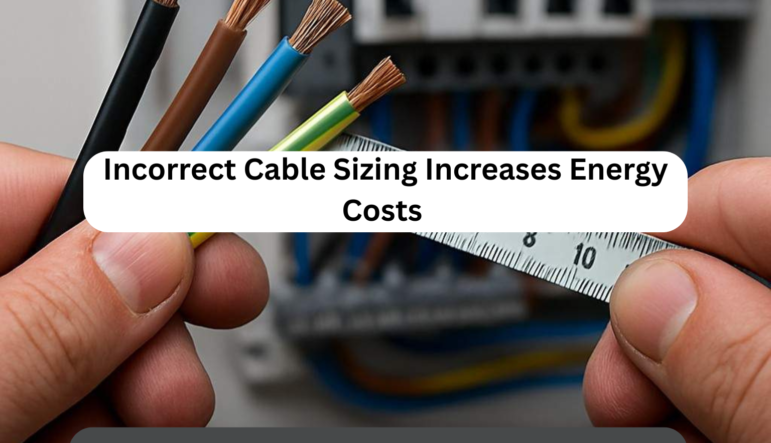
Incorrect Cable Sizing Increases Energy Costs
Incorrect cable sizing is one of the most common and most costly electrical mistakes made in residential, commercial, and industrial buildings across Ghana and other countries. It silently drives up electricity bills, degrades expensive equipment, and creates the conditions for electrical fires that often start inside walls and ceilings, far from sight. The consequences are serious. They are also entirely preventable.
Understanding how incorrect cable sizing increases energy costs and fire risk is the first step toward protecting your property, your finances, and the people who occupy your building.
How Incorrect Cable Sizing Increases Energy Costs and Fire Risk in Buildings
Incorrect cable sizing is one of the most common and most costly electrical mistakes made in buildings across Ghana. It silently drives up electricity bills, degrades expensive equipment, and creates the conditions for electrical fires that start inside walls and ceilings, far from sight. The consequences are serious. They are also entirely preventable.
Understanding how incorrect cable sizing increases energy costs and fire risk is the first step toward protecting your property, your finances, and the people who occupy your building.
What Cable Sizing Is and Why It Matter
Cable sizing is the process of selecting the correct conductor cross-sectional area for a given electrical load, installation method, and cable run distance. Every cable has a rated current-carrying capacity, the maximum current it can carry continuously without exceeding its safe operating temperature. When that limit is exceeded, the cable heats up. When it heats up repeatedly and excessively, the insulation begins to fail.
A correct cable sizing calculation considers several critical factors. These include the load current in amperes, the total length of the cable run, the installation method such as conduit, cable tray, or direct burial, the ambient temperature of the installation environment, and the permitted voltage drop across the circuit. Voltage drop is the reduction in voltage that occurs along a cable as current flows through it. Excessive voltage drop reduces the voltage available at the connected equipment, causing it to operate below its rated performance.
When these factors are ignored, the electrical system may appear to function correctly at first. It will operate inefficiently from the outset, however, and deteriorate progressively over time.
How Incorrect Cable Sizing Increases Energy Costs
When a cable is undersized, its electrical resistance is higher than it should be for the load it carries. Higher resistance means more energy is lost as heat during operation rather than being delivered to the connected equipment.
This is governed by a fundamental electrical principle known as Joule heating. The power lost in a conductor increases with the square of the current flowing through it and with the resistance of the conductor. When resistance rises due to undersizing, energy loss increases rapidly and continuously.
A Practical Example
Consider a single-phase load of 5 kW supplied at 230 volts, with a cable run of 30 metres one way, giving a total loop length of 60 metres. Two cable sizes are compared: a 1.5 mm² copper cable and a correctly sized 2.5 mm² copper cable.
The load current is calculated using the basic power relation. At 5,000 watts and 230 volts, the current is approximately 21.7 amperes.
Typical resistance values for copper cable are 12.1 ohms per kilometre for 1.5 mm² and 7.41 ohms per kilometre for 2.5 mm². Over 60 metres, the resistance of the 1.5 mm² cable is 0.726 ohms. The resistance of the 2.5 mm² cable is 0.445 ohms.
Applying the Joule heating formula, where power loss equals current squared multiplied by resistance, the 1.5 mm² cable loses approximately 342 watts. The correctly sized 2.5 mm² cable loses approximately 209 watts. The undersized cable wastes an additional 133 watts continuously.
Assuming the load operates for 10 hours per day, that difference amounts to 1.33 kilowatt-hours of wasted energy per day and approximately 39.9 kilowatt-hours per month on a single circuit. At current ECG commercial tariff rates, the financial cost of that waste accumulates significantly across an entire installation over a year of operation.
In a commercial or industrial building with multiple circuits, the cumulative financial loss becomes substantial. A single cable sizing error, repeated across an entire installation, costs thousands of cedis in wasted energy every year.
How Incorrect Cable Sizing Creates Fire Risk
The energy cost of incorrect cable sizing is serious. The fire risk it creates is potentially fatal.
The Overheating Cycle
When electrical current flows through a conductor, heat is produced. In a correctly sized cable, that heat remains within safe operating limits and dissipates safely into the surrounding environment. In an undersized cable, heat builds up faster than it can dissipate.
This creates a dangerous self-reinforcing cycle. The cable heats up, which causes its resistance to increase further, which generates more heat, which raises resistance again. Each stage of this cycle accelerates the next. Eventually, the insulation surrounding the conductors begins to break down.
Insulation Degradation
Sustained high temperatures weaken cable insulation. It becomes brittle, loses its elasticity, and begins to crack. Once cracked, it no longer provides reliable protection against electrical contact between conductors or between conductors and surrounding materials.
Loose Connections
Repeated cycles of thermal expansion and contraction loosen terminal connections over time. Loose connections create localised hotspots where resistance is concentrated and heat is most intense. These hotspots accelerate insulation degradation in the immediate area and increase the probability of arcing.
Arcing
Damaged insulation and loose terminal joints create conditions for electrical arcing. Arcing is the discharge of electrical current across a gap between conductors or between a conductor and surrounding material. It produces intense, localised heat and generates sparks capable of igniting nearby combustible materials.
Fire Ignition
Timber, dust, insulation foam, and plastics commonly found inside walls and ceiling voids ignite when exposed to arcing or sustained extreme heat. Because these fires start inside concealed spaces, they are frequently well established before they become visible. By the time smoke is detected, significant structural damage has already occurred.
Common Cable Sizing Mistakes in Ghana
Several recurring errors account for the majority of incorrect cable sizing cases encountered across residential, commercial, and industrial buildings in Ghana.
Cost Cutting on Materials
Some installers specify smaller cables than the load calculation requires to reduce material costs and win contracts at lower prices. The client pays less upfront and more indefinitely through higher electricity bills, premature equipment failure, and eventual rewiring costs. The saving on materials is invariably smaller than the cumulative cost of the inefficiency it creates.
Absence of Load Calculation
Correct cable sizing begins with an accurate assessment of the electrical load each circuit will carry. Without that calculation, cable selection becomes guesswork. Guesswork in cable sizing produces installations that appear functional but operate outside safe parameters from the first day of service.
Ignoring Voltage Drop
Long cable runs require larger conductor cross-sections than the load current calculation alone would suggest. As cable length increases, resistive losses increase proportionally, and voltage drop across the circuit grows. Ignoring voltage drop in long cable run designs produces installations where connected equipment receives insufficient voltage to operate at rated efficiency.
Failure to Account for Installation Conditions
A cable’s current-carrying capacity depends not only on its cross-sectional area but on how it is installed. Cables installed in conduit, cables grouped together in bundles, and cables installed in high ambient temperatures all dissipate heat less effectively than cables installed in free air. Each of these conditions requires the cable to be derated, meaning a larger cross-section must be selected to carry the same current safely. Failure to apply derating factors produces cables that operate above their safe temperature limits under normal load conditions.
Non-Compliance With Regulatory Standards
The Ghana Electrical Wiring Regulations 2011 (L.I. 2008) and BS 7671, the IET Wiring Regulations, set out the requirements for cable sizing across all installation types. Installations carried out without reference to these standards frequently contain cable sizing errors that a compliant design would have prevented. The Energy Commission of Ghana requires all electrical installations to comply with L.I. 2008. Compliance is not optional.
Warning Signs of Incorrect Cable Sizing
Several observable conditions indicate that cable sizing problems may exist in an electrical installation. Each warrants prompt investigation by a qualified electrical engineer.
Frequent tripping of circuit breakers on specific circuits indicates that those circuits are carrying more current than the protective device’s rated capacity. This may reflect undersized cables that are running hot and causing the protective device to operate at currents below the cable’s actual overload level.
Warm or hot cables, sockets, and switch plates indicate that the conductors are carrying more current than their cross-section can safely handle. A cable or fitting that is warm to the touch during normal operation is operating outside its safe temperature range.
Burning smells from outlets or distribution boards indicate that insulation is overheating and beginning to degrade. This condition requires immediate investigation. It is a direct precursor to insulation failure and arcing.
Flickering or dimming lights, particularly when other loads switch on, indicate excessive voltage drop caused by undersized cables. The voltage reduction that occurs when a motor or compressor starts reflects the high resistive losses in the supply cable.
Reduced performance of connected equipment, including motors running slower than normal, air conditioning units failing to reach set temperatures, and refrigeration units running continuously without achieving the required temperature, all indicate that equipment is receiving insufficient voltage due to resistive losses in undersized supply cables.
How Cable Sizing Failures Develop in Commercial PropertiesA Real Case From Accra
Commercial properties in Ghana that upgrade electrical equipment without reassessing their existing wiring face a predictable sequence of problems. Air conditioning units, refrigeration plant, and processing equipment draw significantly more current than the lighting and general power circuits the original wiring was designed to serve. Cables sized for lighter loads begin to overheat immediately under the new demand. Voltage drop across undersized supply circuits causes equipment to operate below rated efficiency. Circuit breakers trip repeatedly as cables approach their thermal limits. Insulation degrades progressively inside walls and ceiling voids until arcing or fire occurs. Every stage of this sequence is preventable through a professional load assessment and cable sizing review before any new equipment is connected.
How to Prevent Incorrect Cable Sizing
Preventing incorrect cable sizing requires professional planning and qualified execution at every stage of an electrical project.
Every connected load must be assessed accurately before cable sizes are selected, including allowance for future load growth. Cable selection must comply with L.I. 2008 and BS 7671. Installation conditions including conduit grouping, ambient temperature, and thermal insulation must be assessed and derating factors applied where required. Voltage drop must be calculated for every circuit of significant length. Every sizing decision must be verified through inspection and testing before the installation enters service.
Electrical wiring design and engineering services in Ghana that follow this process from the outset eliminate cable sizing errors before installation begins. The cost of professional electrical design is a fraction of the cost of correcting an incorrectly sized installation after it has been built.
Why Incorrect Cable Sizing Matters for Building Owners in Ghana
Incorrect cable sizing affects far more than electrical safety. It directly and measurably impacts the finances and operational continuity of every building it affects.
The consequences include increased electricity bills that persist for as long as the undersized cables remain in place, frequent and premature equipment failure caused by voltage irregularities and overheating, unplanned operational downtime, and maintenance costs that compound over time. In industrial and commercial settings, even a modest inefficiency translates directly into reduced productivity and increased operating costs.
For residential property owners, the consequences are equally serious. Undersized wiring in a home creates a fire risk that develops silently inside walls and ceiling voids over months and years. Regular inspection and testing of residential electrical installation services in Ghana identifies developing cable sizing problems before they cause damage.
Correct cable sizing is a one-time investment. The return on that investment is measured in years of reliable, efficient, and safe electrical operation.
Frequently Asked Questions: Incorrect Cable Sizing in Ghana
What is the most common cause of incorrect cable sizing in Ghana?
The most common cause is the absence of a proper load calculation before cable selection. When installers select cable sizes by estimation or habit rather than engineering calculation, the result is frequently undersized conductors that generate excess heat, waste energy, and create fire risk. Cost cutting on materials is the second most common cause, with some installers specifying smaller cables than the load requires to reduce their material costs at the client’s expense.
How does incorrect cable sizing increase electricity bills?
Undersized cables have higher electrical resistance than correctly sized conductors. Higher resistance means more electrical energy is converted to heat in the cable rather than being delivered to the connected equipment. This wasted energy appears directly on the electricity bill. The practical example in this article demonstrates that a single undersized circuit can waste nearly 40 kilowatt-hours of electricity per month. Across an entire building with multiple undersized circuits, the cumulative waste is substantial.
Can incorrect cable sizing cause a fire?
Yes. Incorrect cable sizing is a direct cause of electrical fires. Undersized cables overheat under load, degrading insulation through repeated thermal cycling. Degraded insulation allows arcing between conductors or between conductors and surrounding materials. Arcing produces intense localised heat that ignites timber, dust, and plastics inside walls and ceiling voids. Because these fires start inside concealed spaces, they are frequently well established before they are detected.
How do I know if my building has incorrectly sized cables?
The most reliable method is a professional electrical inspection and testing assessment carried out by a certified electrician. Observable warning signs include frequently tripping circuit breakers, warm or hot cables and sockets, burning smells from outlets, flickering lights when other loads switch on, and connected equipment performing below its rated capacity. Any of these signs warrants immediate professional investigation.
What standards govern cable sizing in Ghana?
Cable sizing in Ghana must comply with the Ghana Electrical Wiring Regulations 2011 (L.I. 2008) and BS 7671, the IET Wiring Regulations. These standards set out the requirements for load calculation, current-carrying capacity, voltage drop limits, and derating factors for all installation types. The Energy Commission of Ghana requires all electrical installations to comply with L.I. 2008. Only licensed and certified electrical engineers have the training and authority to carry out cable sizing calculations and electrical installations in compliance with these standards.
Contact Mega Solution Electrical Engineering Ltd
Mega Solution Electrical Engineering Ltd provides professional electrical wiring design, cable sizing assessment, and installation services for residential, commercial, and industrial properties across Ghana. The company’s licensed and certified electrical engineers conduct detailed load assessments, apply recognised cable sizing standards, and verify every installation through inspection and testing before handover.
To arrange a professional cable sizing assessment, request an electrical design quotation, or discuss an existing installation that may contain cable sizing deficiencies, contact Mega Solution Electrical Engineering Ltd directly from its base in Opanka ST, Sowutuom, Race Course St, Accra
 Posted on Google
 Amos Appiah
Trustindex verifies that the original source of the review is Google.
Thank you Mega Solution Electrical Engineering for your prompt and Professional Electrical Service in Tema Sakumono( C.O.P Sophia Cudjoe Temple) We will always get in touch for further contracts. Good Job!Posted on Google Emmanuel WilsonI hired a licensed electrician from mega solution electrical in Kumasi, the service was done professionally and met all standards. It gave me peace of mind. I will recommend them to every bodyPosted on Google
 Denzel MintahThey’re the best and most reliable electrical company in Ghana I’ll always recommend them to everyonePosted on Google
 Jessica NgThanks for solving our electrical problem so fast, coming all the way to Cantonments.Posted on Google
 Charles Adom-OpokuMega Solution demonstrates exceptional expertise in genset systems. Their professionalism, technical proficiency, and industry experience set them apart. I highly recommend their services to anyone seeking reliable and knowledgeable partners in this field.Posted on Google
 Giuseppe M_CThis best experience I had in a while, Richard provided all the help I was looking for. Thank you, this is a 10 Stars service!Posted on Google
 Joseph OtooBest electrical company in GhanaPosted on Google
 Junior JesusBest Electrician in Ghana | best electrical engineer at good location | over 30 years experience | good electrical service. Thank you so much. I’m very happy
When searching for a reliable electrician, call us at +233 24 415 1232 We specialize in electrical repairs, indoor and outdoor lighting installations, panel upgrades, and even hot tub wiring!
Always Hire Professional Electrical Energy and Power Auditors
No matter urgent any electrical repairs seem, it’s never okay to attempt to handle them on your own. Trying to take care of electrical problems without professional training is extremely dangerous. If you or someone else aren’t hurt during your attempt, there’s still a chance that you’ve left something undone that poses a huge risk to you, your home, or your family. Visit our Google Business Profile
Electrical Energy and Wiring Audit in Accra – Ghana
Mega solution electrical Energy and wiring audit in Accra, Ghana knows what a hassle any electrical problems can be, which is why we’ll always respond to any requests for service as quickly as possible. And because all of our technicians are licensed, background checked, and professionally trained, you’re guaranteed to receive the best quality service and workmanship available when you call us. We can assist with all your electric needs including:
- Generator Installation and Repair Services
- Best Industrial Electrical Automation services
- Best Electric Motor Rewinding Services
- Earthing Installations and Upgrades Services
- Electro-Mechanical services
- Lighting Installation
- Residential Electrical Installation Services
- Electrical Panel Replacement
- LED Lighting
- Industrial electrical Installation Services
- Electrical Troubleshooting and Repairs
- Professional Electrical Support and Training Services
- Electrical Wiring Design and Engineering Services
- Electrical Energy and Power Auditing Services
- Distribution Panels Fabrication and Upgrades Services
- Professional electrical contractors in Ghana
- Commercial electrical Installation Services
- Licensed Electricians in Ghana
- Home Wiring
- Consulting and Advisory services
- Electrical Wirings Testing and Inspection Services
- Wiring Replacement and Upgrade Services
- Residencial, commercial and Industrial wiring Services

Mega Solution Electrical Engineering Ltd
Mega Solution Electrical Engineering Ltd, a licensed and certified electrical engineering company in Ghana specializing in electrical contracting, generator maintenance, energy audits, and industrial electrical services.
Search
Electrical Wiring Contract – What Can Go Wrong or Right
Generator Service Experts in Ghana, When the Lights Go Out – Mega Solution Electrical to the Rescue!
Categories
- Certified Electricians Ghana
- Earthing Installations
- Earthing Maintenance
- Electrical Consulting
- Electrical Contractors
- Electrical Installation Ghana
- Electrical Maintenance Ghana
- Electrical Repair Ghana
- Electrical Safety
- Electrical Training
- Energy Auditing
- Engineering Services
- Generator Installation
- Generator Maintenance Ghana
- Generator Repair
- Generator Services
- Generator Servicing Ghana
- Ghana Electrical Licensing
- Ghana Electrical Services
- Installation Services
- Licensed Electricians
- Motor Rewinding
- Residential Electrical Service
Archive
| M | T | W | T | F | S | S |
|---|---|---|---|---|---|---|
| 1 | 2 | 3 | 4 | 5 | 6 | |
| 7 | 8 | 9 | 10 | 11 | 12 | 13 |
| 14 | 15 | 16 | 17 | 18 | 19 | 20 |
| 21 | 22 | 23 | 24 | 25 | 26 | 27 |
| 28 | 29 | 30 | ||||
Tags
- Agricultural Engineering
- Cable Sizing
- Commercial Electrical Contracting
- Earthing Installations and Upgrades Services
- Earthing Systems
- Earthing System Upgrades
- Electrical Advisory Service
- Electrical Company
- Electrical Contractors in Ghana
- Electrical Design Ghana
- Electrical Energy and Power Auditing Services
- Electrical Energy Auditing
- Electrical Load Calculation
- Electrical Panel Upgrades
- Electrical Repair Services
- Electrical Safety Training Ghana
- Electrical Services Ghana
- Electrical Training Services Ghana
- Electrical Troubleshooting
- Electrical Wiring Certificate Ghana
- Electrical Wiring Design and Engineering Services
- Electrical Wiring Design Ghana
- Electrical Wiring Installation
- Electrical Wiring Upgrades
- Electrical Workshop Training
- Electricians
- Electricians in Ghana
- Engineering Services Ghana
- Generator experts in Ghana
- Generator Installation and Repair Services
- Generator Maintenance Contracts
- Generator Maintenance Ghana
- Generator Repair Services
- Industrial Electrical Wiring
- Industrial Generator Maintenance
- Industrial generator repair services
- Licensed Electrical Contractors Ghana
- Licensed Electricians in Ghana
- Lightning Protection Systems
- Power Auditing Services
- Professional Electrical Support
- Residential Electrical Installation Ghana
- Three Phase Power
- Voltage Drop
- Workplace Electrical Safety
Prayer Warfare
Recent Comments
